AI and the Future of Education
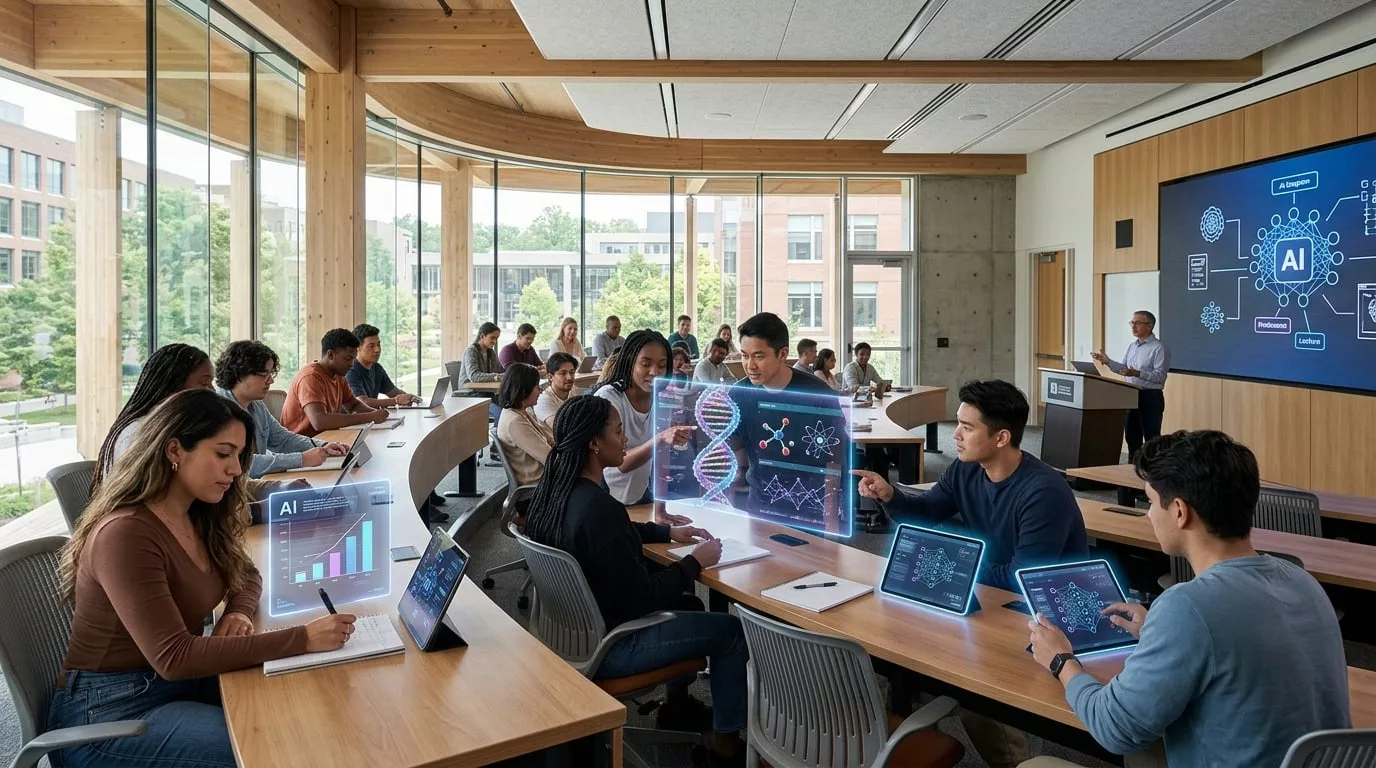
Artificial intelligence is no longer a futuristic add-on in education; it is becoming part of the everyday machinery of learning. In 2026, schools, universities, and edtech companies are moving beyond simple chatbots and into AI systems that can tutor students, draft lesson plans, summarize progress, translate materials, and adapt content to a learner’s pace. The biggest shift is not just that AI can answer questions faster. It can now help personalize the learning experience at scale, giving each student a kind of on-demand support that was once impossible in a crowded classroom.
That said, the future of AI in education is not a single story. It is a tug-of-war between real opportunity and real risk.
Boomer Perspective — Why AI Could Be a Breakthrough
The optimistic view is straightforward: AI can make education more personal, more efficient, and more accessible. A student who is stuck on a math problem at 10 p.m. no longer has to wait until the next school day for help. An AI tutor can offer hints, explain concepts in different ways, and provide endless practice without judgment. For struggling learners, that kind of instant feedback can be transformative.
Teachers may benefit just as much. AI can reduce repetitive workload by helping with grading, lesson planning, quiz creation, and progress tracking. That means educators can spend more time on what humans do best: motivating students, building trust, and guiding discussion. In the best-case scenario, AI does not replace teachers; it gives them more room to teach.
AI also has a strong case for inclusion. It can translate content, support students with disabilities, and adapt instruction for different reading levels or learning speeds. For large school systems and under-resourced districts, this kind of support could help narrow gaps that have persisted for decades. The hopeful argument is that AI could finally make high-quality tutoring less rare and less expensive.
Doomer Perspective — Why AI Could Make Education Worse
The cautionary view is just as compelling. If students rely on AI too heavily, they may stop practicing the mental effort that leads to deep learning. A tool that gives instant answers can also weaken curiosity, patience, and problem-solving skills. The fear is not just cheating on assignments; it is a slow erosion of the ability to think independently.
There are also equity concerns. Students with better devices, faster internet, and more support will benefit first, which could widen the gap between the haves and have-nots. Meanwhile, schools may adopt AI tools before they fully understand data privacy, bias, or accuracy problems. If an AI system is wrong, overly confident, or culturally skewed, it can mislead learners at scale.
Perhaps the biggest concern is cultural: education is not only about efficiency. It is about memory, discipline, judgment, and human connection. If schools optimize too aggressively for automation, they may end up weakening the very habits that make learning meaningful.
A Balanced View
The most realistic future is not AI replacing education, but AI reshaping it. The winners will likely be schools that use AI deliberately: with clear rules, strong teacher oversight, and a focus on learning rather than shortcuts. AI should handle the repetitive parts of education while leaving relationships, interpretation, and judgment to humans.
Used wisely, AI can widen access and improve outcomes. Used carelessly, it can deepen inequality and hollow out learning. The challenge for education is not whether to adopt AI, but how to make sure it amplifies human intelligence instead of substituting for it.