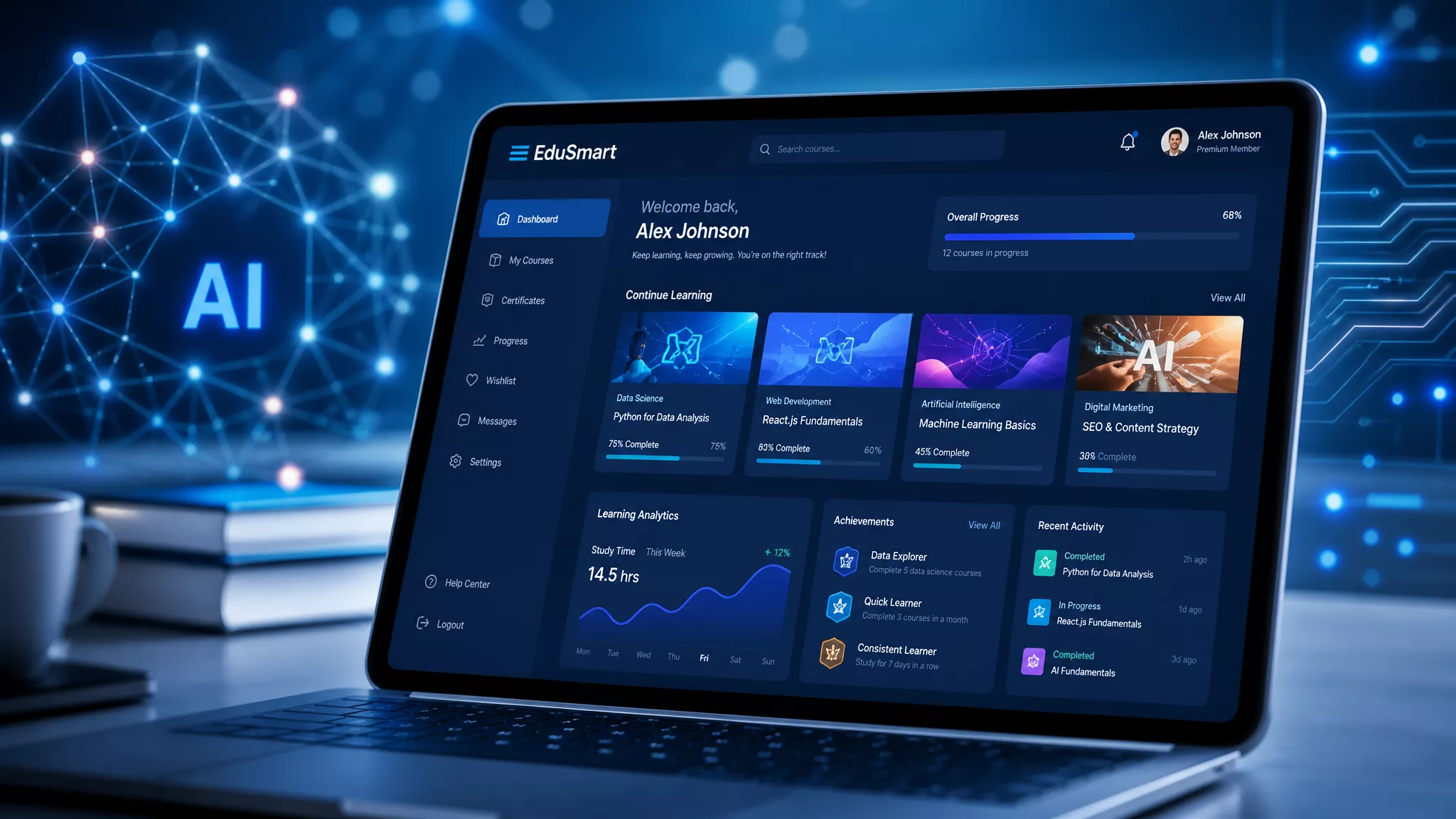
AI and the Future of Learning Websites
Overview
AI is quickly becoming the engine behind the next generation of learning websites. What began as simple course recommendations and auto-graded quizzes is evolving into adaptive tutoring, real-time feedback, multilingual support, and personalized learning paths that change as a student progresses. On modern e-learning platforms, AI can help match content to a learner’s level, suggest the right next lesson, summarize difficult material, and even coach students through practice problems step by step. For educators and platform owners, it can automate routine work such as content tagging, question generation, progress tracking, and student support. The result is a learning experience that feels less like a static library and more like an interactive guide.
Boomer Perspective — AI as a Great Democratizer of Learning
From an optimistic point of view, AI could make learning websites far more useful, inclusive, and accessible. A student in a rural area with limited access to tutors could get 24/7 help from an AI assistant. A working parent could study at night with a platform that adjusts pacing to fit a busy schedule. A child struggling with math could receive extra practice exactly where the gaps are, instead of repeating lessons they already know.
This is where AI’s promise shines: it can democratize education at scale. Good learning websites may offer personalized instruction that used to be available only through expensive one-on-one tutoring. AI can also translate content, adapt reading difficulty, and provide voice interaction for learners who prefer speaking over typing. For teachers, it can reduce administrative burden and free up time for mentoring, coaching, and human connection. In the best case, AI does not replace educators — it amplifies them.
Doomer Perspective — The Risks Are Real
The cautionary view is just as important. Learning websites powered by AI may collect enormous amounts of sensitive student data, raising privacy and surveillance concerns. If platforms know every click, pause, mistake, and weakness, they can build powerful learner profiles — but they can also misuse them, intentionally or not.
There is also the risk of over-reliance. If students let AI do too much of the thinking, they may complete assignments without truly learning the material. That can create a false sense of mastery. In addition, AI systems are not always accurate. They can hallucinate facts, reinforce bias, or generate bland, low-quality explanations that sound convincing but mislead users. And if schools and learning companies lean too heavily on automation, some tutoring, content-development, and support jobs could be displaced or devalued.
Balanced Analysis
The most realistic future is neither pure utopia nor catastrophe. AI will probably make learning websites more adaptive, efficient, and scalable — but only if they are designed with clear guardrails. The best platforms will treat AI as a learning partner, not an authority. They will keep humans in the loop, protect student data, and build tools that encourage curiosity rather than shortcuts.
In other words, the question is not whether AI will reshape learning websites. It already is. The real question is whether designers, educators, and policymakers will shape AI into something that deepens understanding, expands access, and preserves trust. If they do, learning websites could become more personal and powerful than ever. If they don’t, they risk becoming faster, shinier, and far less educational.