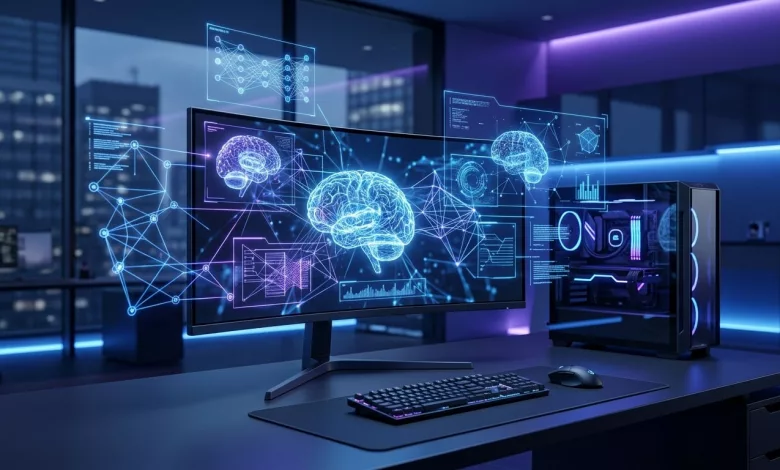
The Future of AI in Computing
Artificial intelligence is no longer just a feature inside computers; it is rapidly becoming the layer that helps shape how computers are built, used, and understood. From copilots that write code and explain errors to chip designs optimized by machine learning, AI is pushing computing beyond the old model of clicking, typing, and manually configuring everything. It is also changing the relationship between people and machines: computers are becoming more conversational, more predictive, and more capable of adapting to user intent.
In the near future, AI will likely touch nearly every part of computing. Operating systems may learn user habits and automate routine tasks. Development environments will continue to integrate AI assistants that generate code, test software, and help debug problems in real time. Hardware will evolve too, with specialized AI accelerators becoming as important as traditional CPUs and GPUs. At the same time, AI will help make computing more accessible by lowering the skill barrier for building apps, analyzing data, and interacting with complex systems.
Boomer Perspective — AI as a Computing Superpower
The optimistic view is simple: AI will make computers far more useful for far more people. For professionals, AI can eliminate repetitive work, accelerate research, and reduce friction in everyday tasks. A designer can generate prototypes faster. A developer can ship software with fewer bottlenecks. An analyst can ask plain-language questions instead of writing complex queries. In this sense, AI acts like a force multiplier, allowing humans to focus on creativity, judgment, and strategy rather than tedious execution.
AI may also democratize computing. People who once needed advanced technical training may soon be able to create software, automate workflows, or explore data using natural language. That means more entrepreneurs, more independent creators, and more innovation from people outside the traditional tech elite. For education, AI tutors and personalized learning systems could make computing skills easier to learn and more widely available.
There is also a broader hardware benefit. AI can help optimize power consumption, improve system reliability, and enable smarter devices at the edge. Computers could become more responsive, more secure, and more energy efficient. In the best-case scenario, AI does not replace computing; it upgrades it.
Doomer Perspective — AI as a Risk Multiplier
The pessimistic view is that AI could erode the very foundations that made computing powerful in the first place. If AI systems write most of the code, many workers may lose opportunities to practice, learn, and build deep expertise. That could create a generation of users who can operate tools but do not understand the systems beneath them. Over time, dependence on AI may weaken human problem-solving skills and reduce technical resilience.
Security is another major concern. AI can be used to produce phishing attacks, automate malware development, and discover software vulnerabilities faster than defenders can patch them. As computing becomes more AI-driven, the attack surface grows. A system that is helpful and autonomous is also a system that can be manipulated, misled, or hijacked.
There is also the risk of concentration. If a few large companies control the most powerful AI models, they may end up controlling the next generation of computing infrastructure. That could limit competition, increase surveillance, and make everyday computing more dependent on opaque systems that users cannot fully inspect or trust.
A Balanced View
Both perspectives are true in different ways. AI will almost certainly make computers more capable, more intuitive, and more productive. But it will also create new dependencies, new vulnerabilities, and new inequalities. The real question is not whether AI will change computing, but whether people will shape that change wisely.
The healthiest future is one where AI augments human skill instead of replacing it, where security and transparency are built in from the start, and where access to AI-powered computing is broad rather than concentrated. If that happens, AI will not just change computers. It will redefine what computing means.