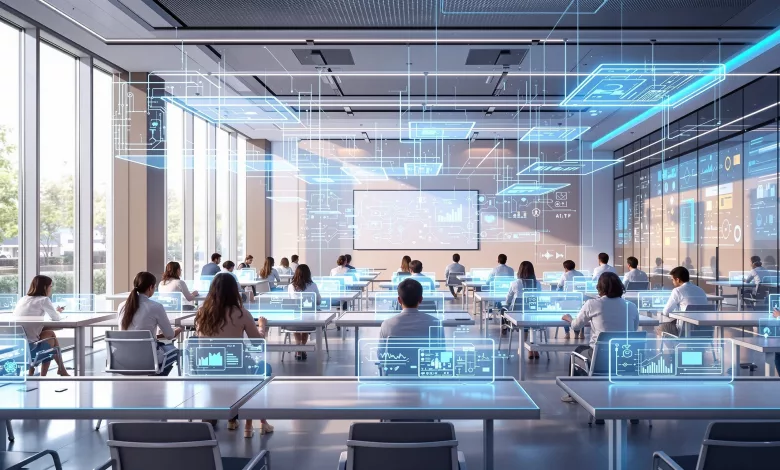
AI and the Future of Education: Promise or Peril?
Artificial intelligence is no longer a far-off concept from science fiction; it’s actively entering our classrooms. From generating lesson plans to offering personalized tutoring, AI is rapidly reshaping the educational landscape. This technological shift presents powerful new tools for students and teachers, but it also brings a wave of complex questions and concerns. As we stand at this crossroads, it’s crucial to examine both the optimistic vision and the cautionary tales surrounding AI’s role in education.
Boomer Perspective
The optimistic view champions AI as a revolutionary tool for enhancing learning. Proponents envision a future where AI-driven platforms provide deeply personalized learning paths for every student, acting as a tireless 24/7 tutor that adapts to individual paces and styles. This technology can make education more accessible than ever, offering real-time translation and adaptive interfaces for students with disabilities or diverse language backgrounds. Furthermore, AI promises to alleviate the immense administrative burden on teachers by automating tasks like grading and paperwork. This frees up educators to focus on what they do best: mentoring students, fostering creativity, and providing the uniquely human connection that is central to growth.
Doomer Perspective
On the other side of the debate, a more pessimistic view warns of significant risks. The most immediate fear is the potential for job displacement, or a radical shift in the teaching profession that leaves many behind. There is also a serious concern that an over-reliance on AI could lead to “cognitive offloading,” where students use AI as a crutch, hindering the development of their own critical thinking and problem-solving skills. Moreover, the vast amounts of sensitive student data required to power these systems raise major privacy and surveillance issues. An education system built on constant monitoring could erode trust and stifle the very creativity and free expression it aims to foster, all while diminishing the vital, human-to-human relationships that are the bedrock of effective learning.
A Balanced Analysis
The future of education will likely not be a binary choice between human teachers and AI-powered platforms, but rather a synthesis of the two. The most effective path forward involves a hybrid model where AI serves as a powerful co-pilot, not the pilot. By handling the more mechanical and data-driven aspects of teaching, AI can empower educators to double down on the irreplaceable, human elements of their role—mentorship, inspiration, and emotional support. Successfully navigating this transition depends on our ability to implement these tools thoughtfully, establish robust data privacy regulations, and, most importantly, maintain a steadfast commitment to keeping human connection at the heart of the classroom.