AI and the Future of Education
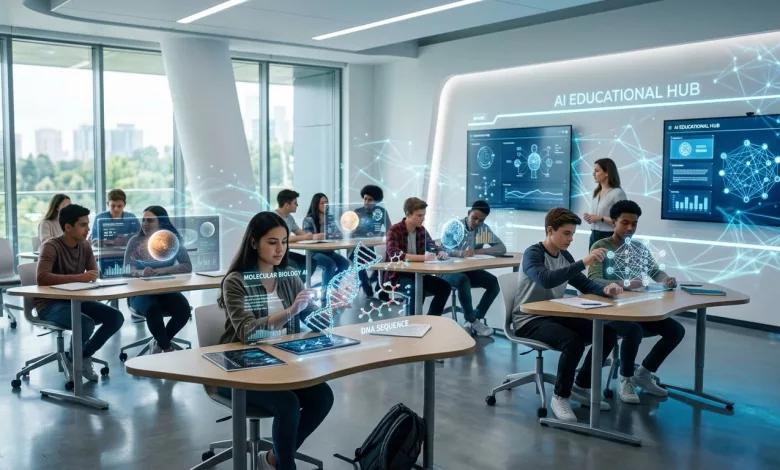
Artificial intelligence is rapidly moving from a niche classroom experiment to a core part of the education conversation. Schools and universities are using AI to personalize lessons, automate routine tasks, generate practice materials, and support students who need extra help. In some classrooms, AI tutors can now adapt to a learner’s pace in real time, while teachers use AI tools to draft quizzes, summarize reading materials, and identify where students are struggling. The promise is simple: make learning more responsive, more efficient, and more accessible.
At its best, AI could help education become more tailored to each student. A child who needs extra practice in math can get it instantly, while another who is ready to move ahead can avoid being held back. Teachers, meanwhile, may gain back time that would otherwise be spent on grading, lesson prep, and administrative work. In a world where many schools face staff shortages and crowded classrooms, that matters. AI could also make learning more inclusive by supporting translation, accessibility tools, and individualized feedback for students with different needs.
Boomer Perspective
The optimistic view of AI in education is that it can amplify what great teachers already do. Rather than replacing educators, AI can act like a tireless assistant that handles repetitive tasks and gives every student more attention. It can help create a classroom that feels less one-size-fits-all and more like a custom learning journey.
Supporters also point to AI’s ability to broaden access. Students in remote or under-resourced communities may eventually benefit from high-quality tutoring and learning support that was once available only to a few. AI could help close gaps in achievement, especially when used to identify learning problems early and provide timely intervention. For teachers, it may reduce burnout by handling paperwork and speeding up content creation, freeing more energy for mentoring, discussion, and creativity.
Doomer Perspective
The cautionary view is that AI could make education more efficient while quietly making it less human. If schools rely too heavily on AI, students may become dependent on tools that do the thinking for them. That could weaken critical thinking, writing, and problem-solving skills over time.
There are also serious concerns about privacy, bias, and academic integrity. AI systems often collect large amounts of student data, raising questions about who sees it and how it is used. If the underlying data is flawed, AI can reinforce unfair assumptions or produce misleading recommendations. And with generative AI able to write essays, solve problems, and create summaries in seconds, schools may struggle to tell the difference between genuine learning and polished machine output.
A Balanced View
The future of AI in education is unlikely to be purely bright or purely bleak. The most realistic outcome is somewhere in between. AI will probably become a normal part of learning, but its value will depend on how carefully it is used. When AI supports teachers, protects student data, and encourages deeper learning, it can be a powerful force for good. When it replaces judgment, weakens trust, or turns students into passive consumers, it becomes a problem.
The real challenge is not whether AI belongs in education. It already does. The question is whether schools will shape AI to serve human learning, or let AI shape education around efficiency alone. The best future is one where technology helps teachers teach better, students learn better, and education stays fundamentally human.